
CRM + AI: why the sales pipeline is the best playground
Why start AI through sales ops rather than marketing or support: measurable ROI in 90 days, structured data, natural sponsor, and zero regulatory risk.
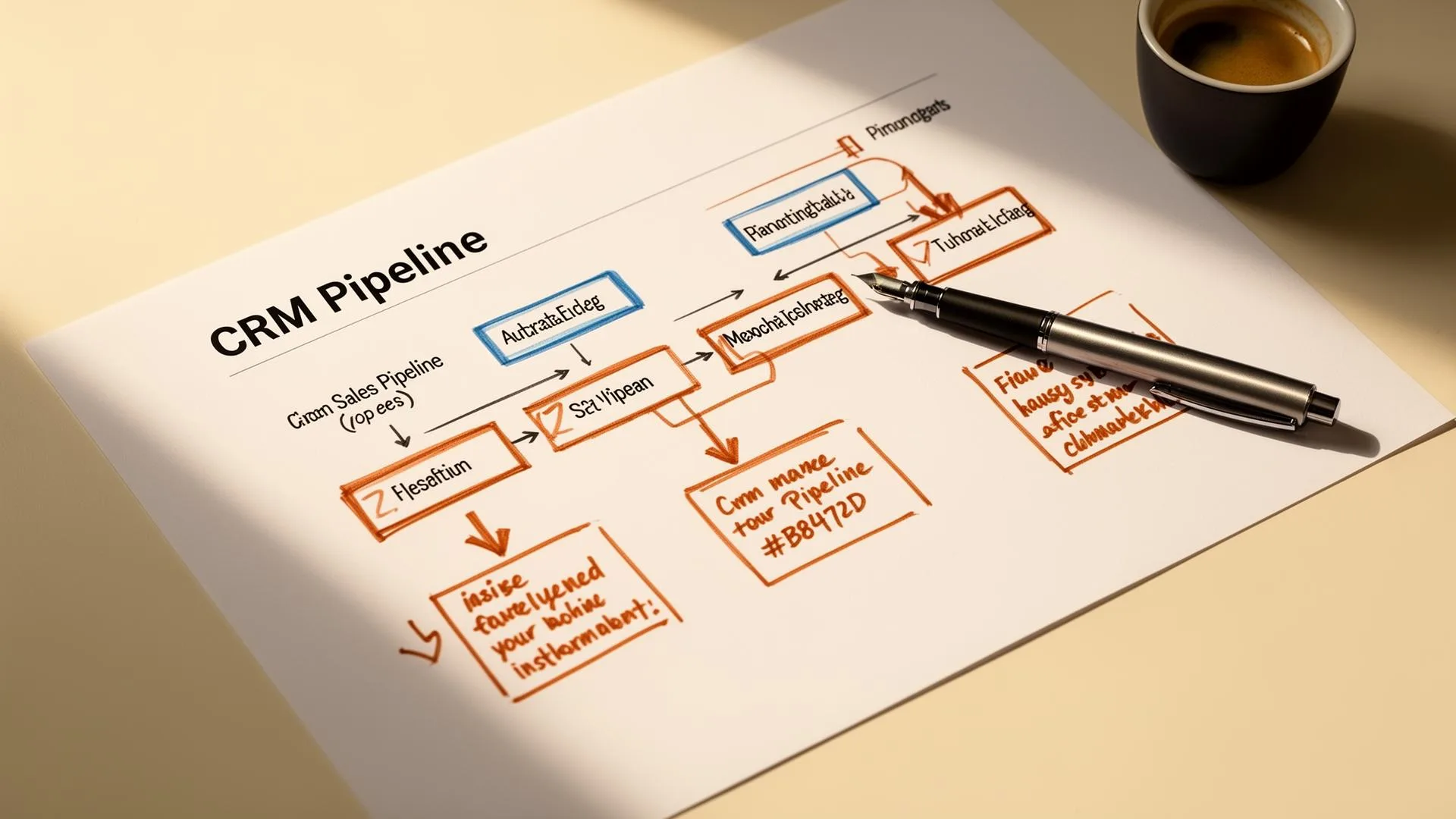
When an executive asks us where to start with AI in their organisation, our answer is almost always the same: start with the sales pipeline. Not marketing automation, not support chatbots, not content generation. The CRM.
Why sales is the ideal terrain
- Data is already structured (deals, contacts, activities, amounts, dates).
- ROI is measured in euros and conversion percentage, not in fuzzy « engagement ».
- The natural sponsor (VP Sales) is used to data-driven steering and defending budgets.
- Regulatory risk is low: internal B2B data, no automated HR or financial decision-making.
- Feedback cycles are short: 60 to 90 days are enough to measure a pipeline effect.
The 3 high-leverage use cases
First case: composite scoring of incoming leads. Instead of static scoring on 5 criteria, a model ingests 30 to 50 signals (intent, fit, urgency, recurrence, freshness) and produces a dynamic score. SDRs call first what actually converts.
Second case: opportunity qualification. An agent analyses the conversation history (emails, calls, CRM notes) and proposes to the rep a synthesis with risk level, recommended next steps and friction points detected. Preparation becomes faster and qualification more consistent.
Third case: anomaly detection on the pipeline. AI spots deals that are « sleeping » (no activity for X days on amount > Y), strategic accounts with no recent touch, forecasts inconsistent with history. The manager steers on exceptions, not on noise.
The trap to avoid: replacing your CRM
We regularly see organisations consider switching CRM « to move to a more AI-friendly tool ». Scoping mistake. A CRM is replaced every 7 to 10 years, it's a 12-month project with a heavy budget. The AI layer, on the other hand, builds in 8 to 12 weeks on top of what you already have. Start with the layer, not the foundation.