
One file, from the first application to the invoice
Group S wanted its Workers recruiters to keep the same fluidity once a candidate says yes. We built a single tool where the hiring pipeline hands over to contracting on one status, with an AI recruiting assistant inside the daily gestures rather than beside them.
- Duration
- Less than 2 months
- Sector
- HR · ATS & VMS for Workers
- Size
- Group · Belgium
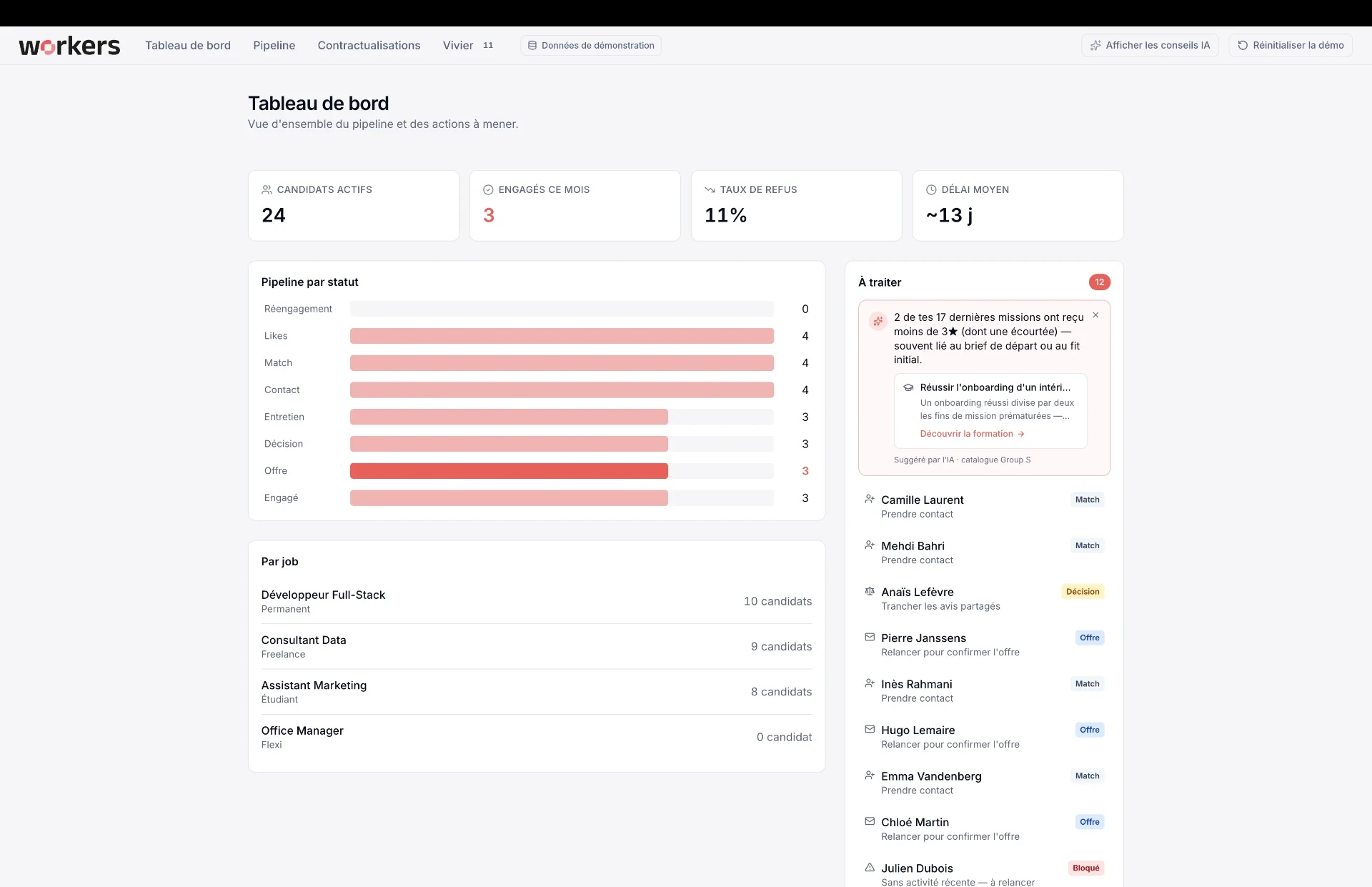
What is moving today: active candidates, open files, average time to hire.
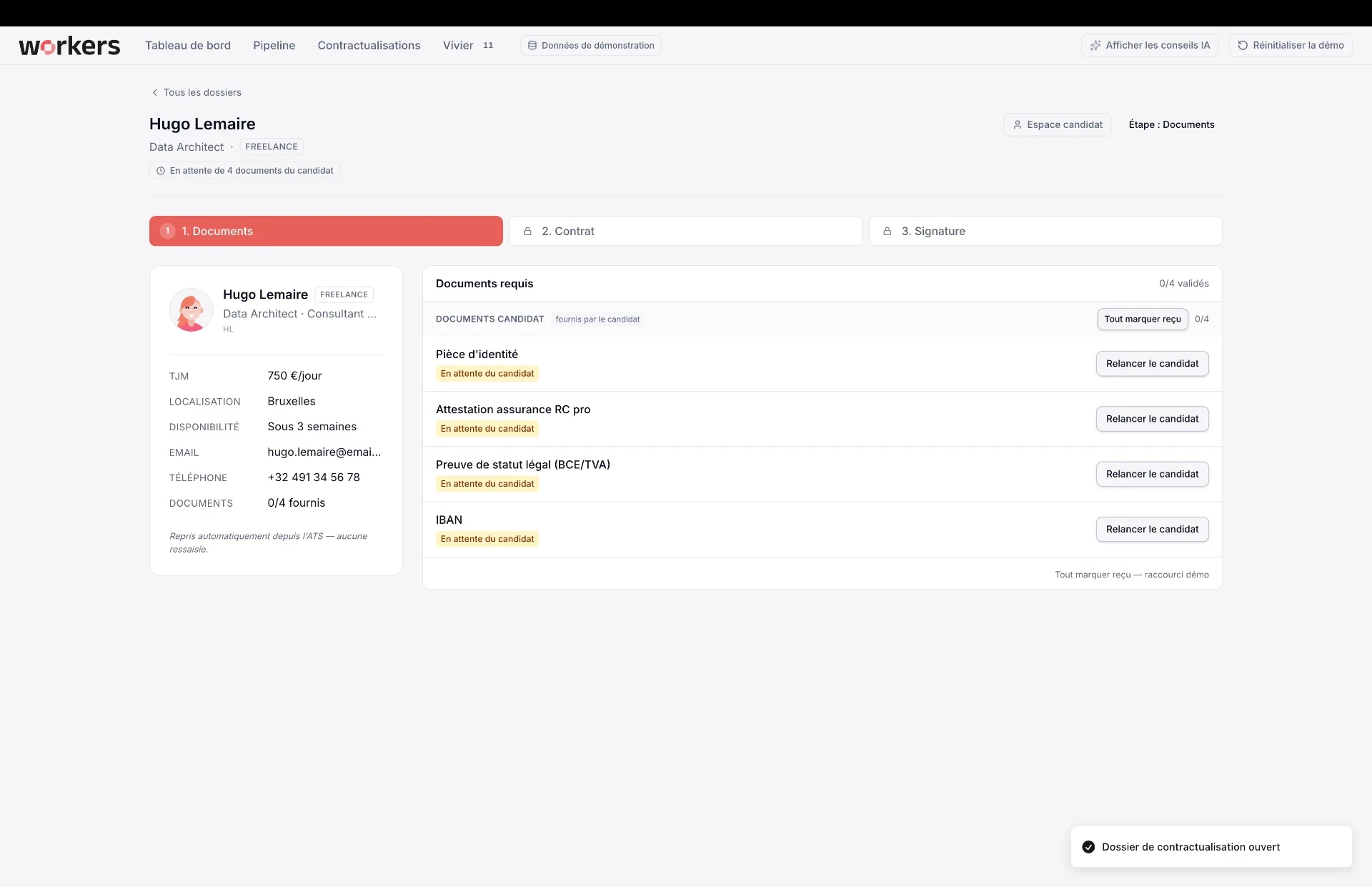
Required paperwork follows the candidate's status, carried over from the ATS with no retyping.
- ATS · Applicant Tracking System
- Follows candidates for an opening, from the first application to the hire: pipeline, records, team opinions, reusable talent pool.
- VMS · Vendor Management System
- Handles what comes next: paperwork, contracts, signature, worked days and invoicing for freelancers and external providers.
Group S
Group S is one of Belgium's leading HR service groups. Workers is its recruitment brand, and its recruiters place permanent staff, freelancers, students and flexi workers for client companies.
How did it work before?
The recruitment platform stopped exactly where the real work began. Once a candidate was hired, everything became manual again: papers by e-mail, a contract in Word, a scanned signature, worked days in a spreadsheet and an invoice typed by hand, with four different regimes to keep straight.
Bring the whole after-the-yes into a single file, open on both sides, recruiter and candidate, and let the AI assistant carry the writing work instead of the recruiter.
Step by step.
- Step 1
A pipeline that also remembers past candidates
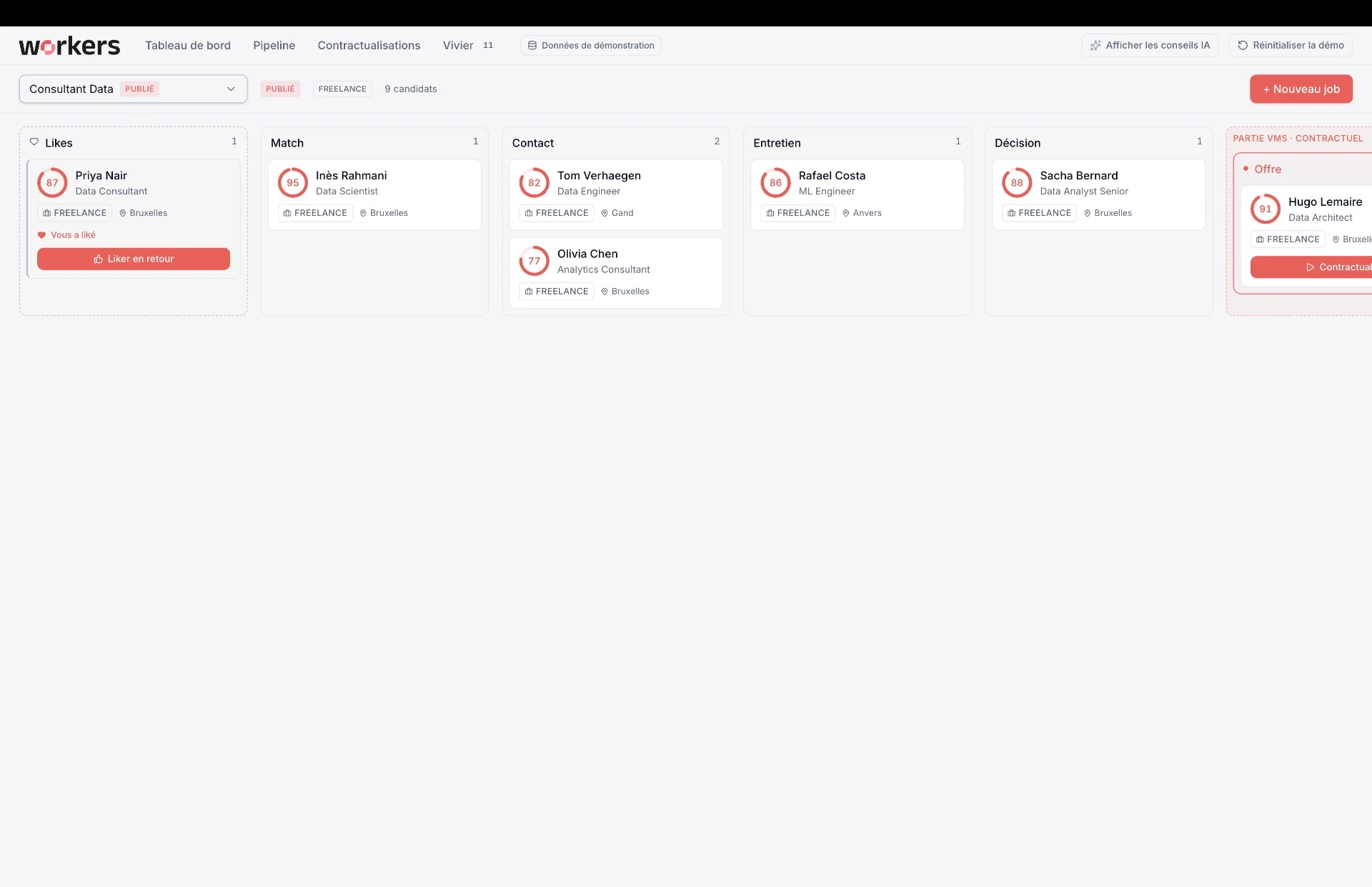
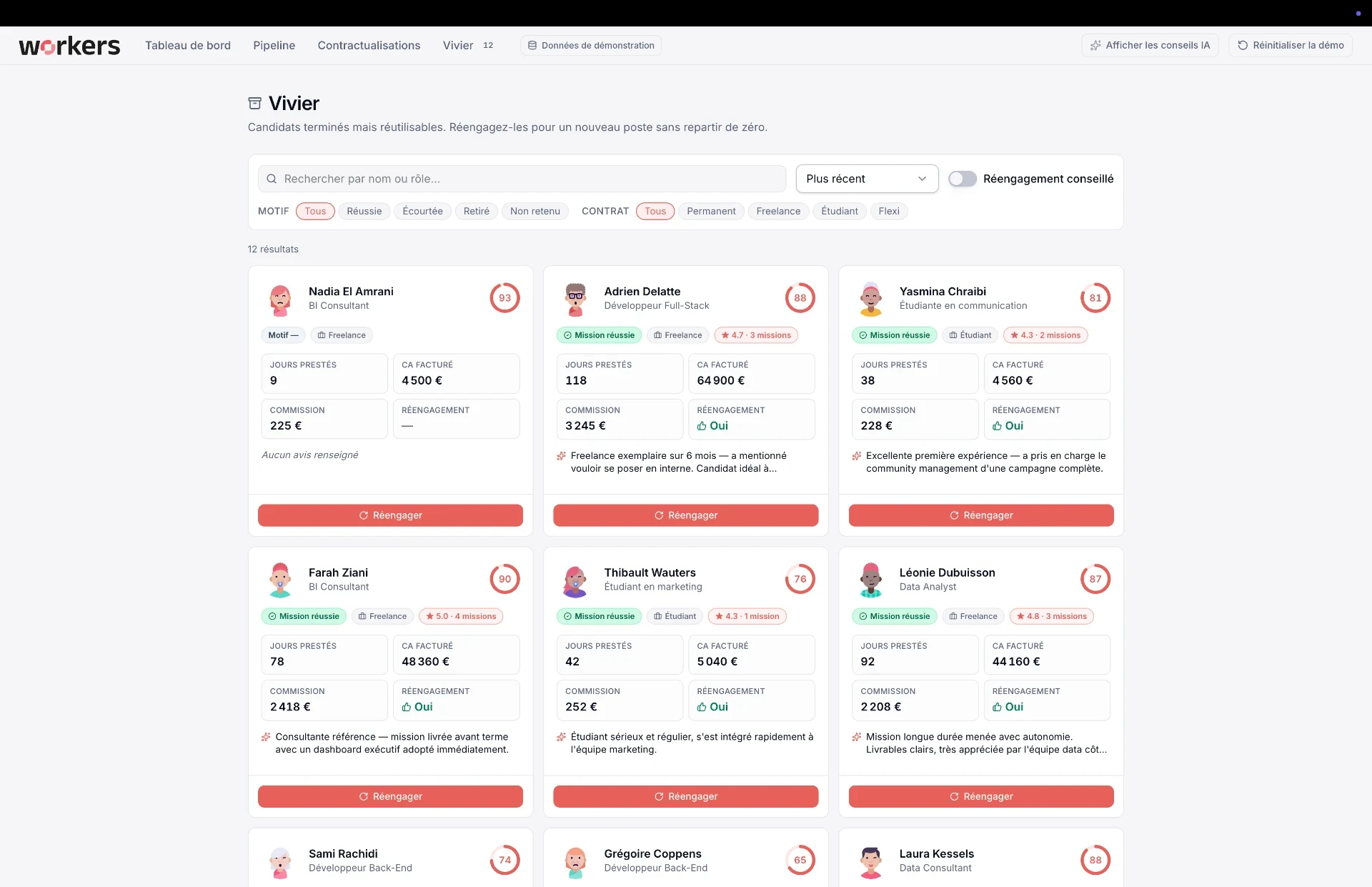
Nine stages from re-engagement to hire, with candidate records, scores, qualified team opinions and refusal reasons. Finished-but-reusable profiles stay in a talent pool, so a new opening does not start from zero.
- Step 2
Contracting in five steps, driven by the contract type
Papers, contract, signature, mission tracking, invoicing. The required documents follow the regime: a freelancer is not asked for a diploma, a student is not asked for a VAT number. Recruiter and candidate work the same file live, and a rejected document comes back with a reason.
- Step 3
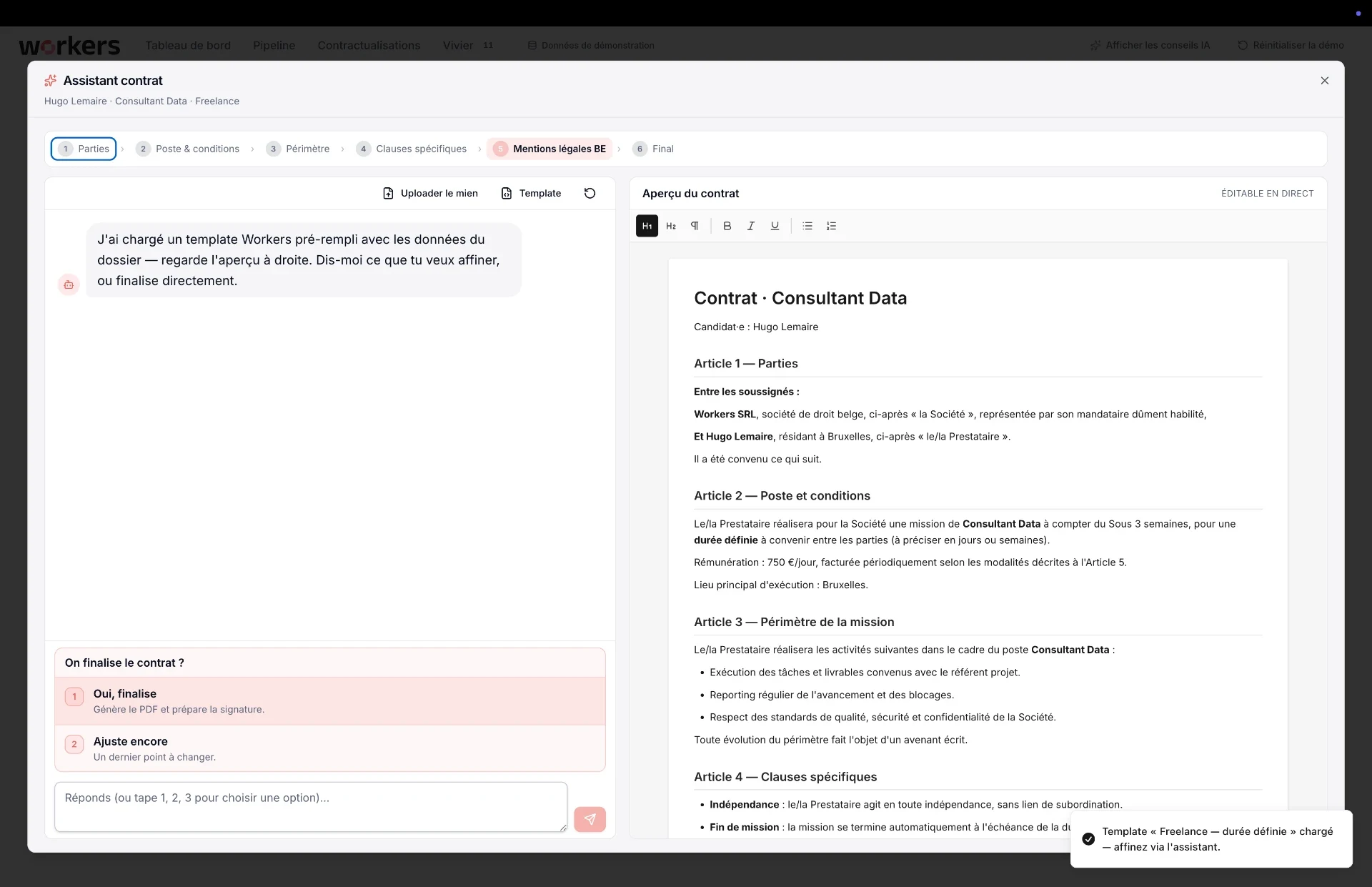
The contract written with the AI assistant
Five sections written one by one, then assembled: parties, role and terms, scope, specific clauses, Belgian legal mentions. Every section stays readable, editable by hand and can be regenerated from an instruction in plain words, starting from the edited text rather than overwriting it.
- Step 4
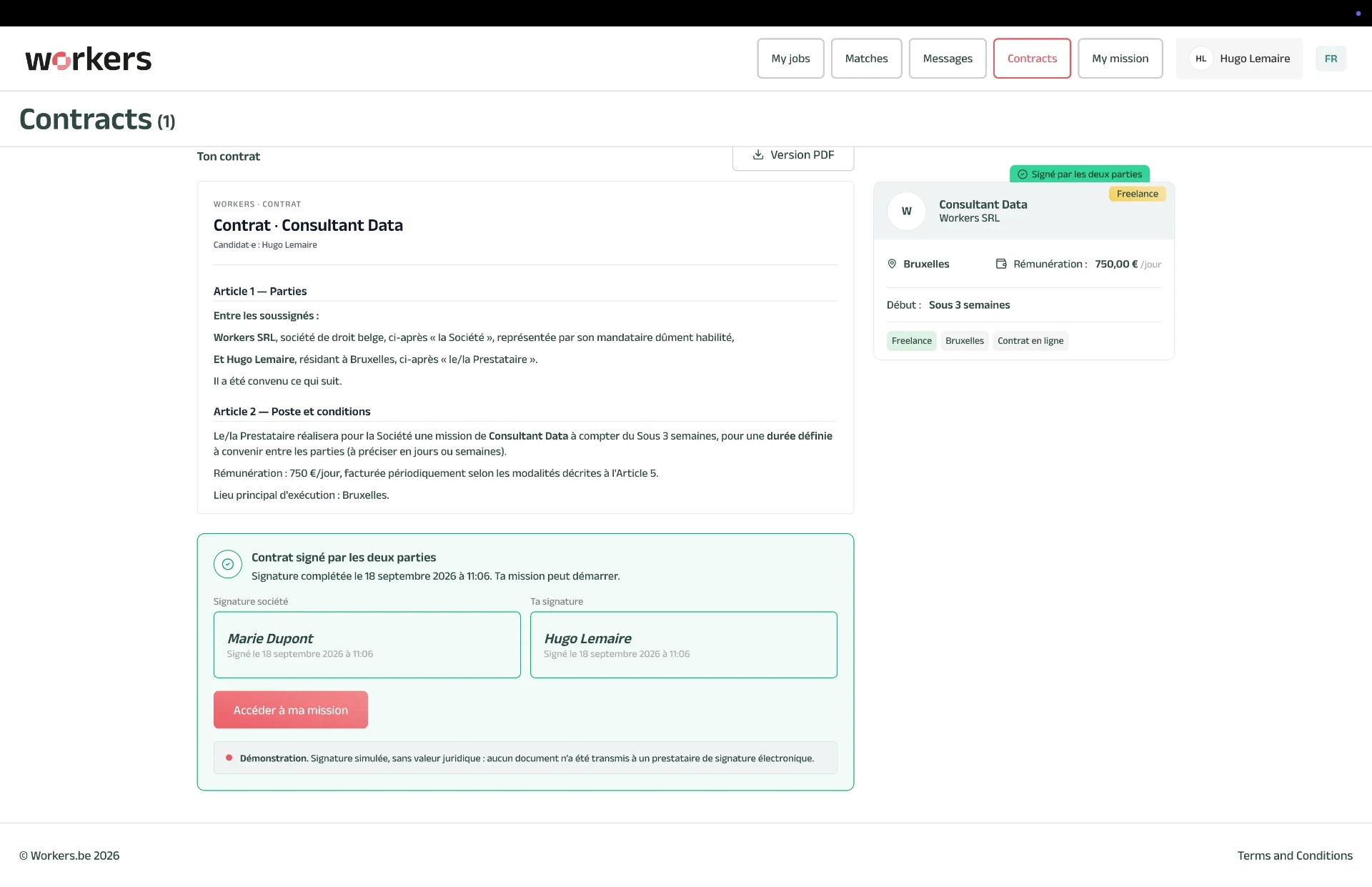
Signature, worked days, then the commission invoice
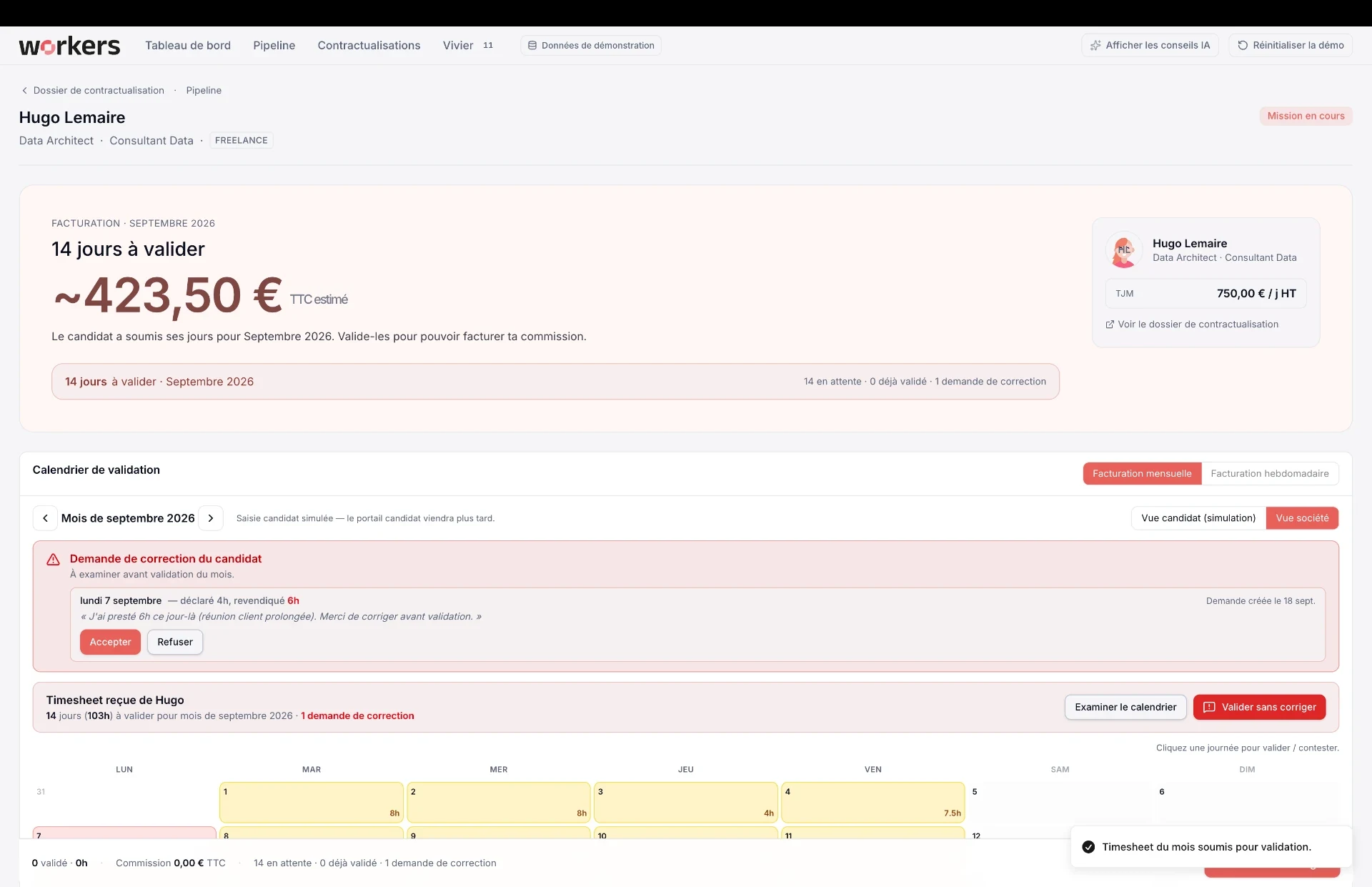
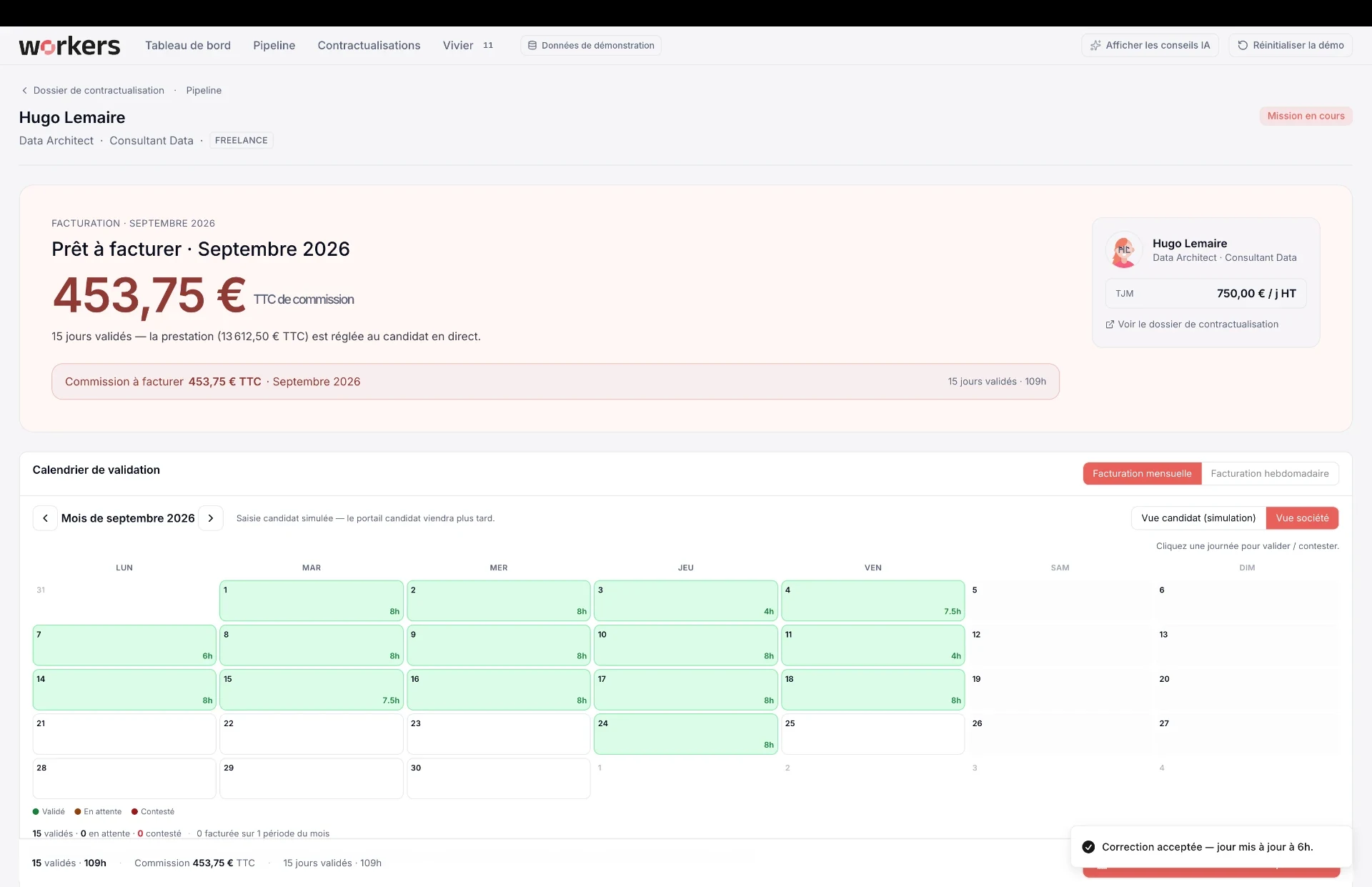
Company then candidate sign the same document and the mission starts. The candidate then submits worked days and can request a correction; the recruiter accepts or refuses, and the commission invoice is produced from validated days only. In the demo the signature is simulated: no document is sent to an electronic signature provider.
What is measurable.
- 4Contract regimes covered: permanent, freelance, student, flexi
- 9Stages in the hiring pipeline
- 5Steps in the contracting file
- < 2 mo.From the first screen to the full journey
Not (yet) ready to talk?
Try the AI Radar first : a free AI diagnostic in 10 minutes, with a prioritized roadmap as outcome.
What follows.
The tool is a demonstration prototype: the data shown is simulated, nothing is written back to the Workers platform, and electronic signature remains the next step, to be wired to the eIDAS route the group picks. A missing field stays visibly empty instead of being filled with a plausible value. Workers back-office identifiers are carried from day one, so the tool lines up with the CRM and the invoicing rather than becoming a fourth source of truth.
A context close to yours?
Scope, timeline and price in writing within 5 business days, before any commitment.
Describe your trade.
We'll show you the tool.
30 minutes to understand your need, then a scope, a timeline and a price in writing within 5 days. And a prototype before any commitment.